

Four weeks from a move in the Philadelphia suburbs? Call LiteMovers at (610) 755-5535 and lock in a written estimate while the calendar still has room.
The month before moving breaks into four jobs. Clear what you will not take, count and buy your boxes, settle the appliances and the truck, and clean up for the buyer. Do them in that order and the last week is quiet. Do them backwards and the truck arrives before you finish.
This is the hub for the week. Each section answers one question and links to the full post behind it. The examples come from real jobs across Montgomery, Chester, Delaware and Bucks County, from a Glenside twin to a Newtown Square colonial.

What Should the Month Before Moving Look Like, Week by Week?
Think of the month before moving as a countdown with one theme per week. The order matters more than the pace. Sorting comes first because every box you do not pack is a box nobody carries, counts or unpacks.
- Four weeks out: decide. Walk every room, the basement included, and mark what goes, what sells, what gets donated and what leaves as trash. Book your mover and ask for a written estimate.
- Three weeks out: clear. Run the donation trips and the junk pickup. Order boxes based on what is left, not what you started with.
- Two weeks out: pack. Start with rooms you do not use daily. Confirm parking, elevator and access at both addresses. File your change of address.
- One week out: finish. Empty and defrost the fridge, pack the kitchen last, and set aside the bag that rides with you. If you are selling, schedule the cleaning ahead of the walkthrough.
Families who follow that order tell us the last week felt slow. That is the goal. If you want the longer version with the day-of details, our moving tips guide carries the whole timeline. The rest of this page takes each week apart.
Do You Know Which Township You Are Actually Moving To?
Start the month before moving by confirming who runs your new street. That sounds obvious until you buy in Glenside, which is a place name, not a government. Half of it sits in Abington Township and half in Cheltenham. Trash day, truck permits, the school your kids attend and who plows the snow all depend on which half you bought.
The same trap exists across the suburbs. Wayne spans three townships and two counties. Media the borough and Media the mailing address are not the same thing. So the first week of the month before moving needs two things. Call the township office, and look at the school district map.
Then walk the street itself. Older twins built in the 1920s and 1930s have stairwells that turn hard at the landing and doorways cut narrow. Curb space is short. We wrote up how all of that plays out in moving to Glenside, and the lesson applies to any older Montgomery County block. Our Montgomery County movers handle these streets every week.
Why Should You Clear the House Before You Pack It?
Because a house is a better sorting room than a truck. During the month before moving you still have a dining table, a spare bedroom and a driveway to stage things on. Once everything is boxed, every skipped decision gets made twice. Once at the truck, and again when it will not fit through the new door.
Clear first, or pack first?
- Clear first: the estimate reflects the household you are taking. Fewer boxes, a shorter crew day, and nothing arrives that has to leave again.
- Pack first: faster to start, but you pay to move things you will discard. The estimate drifts, and the sorting happens in less space under more pressure.
The basement is where this decision is won or lost. A basement cleanout in an older Delaware County or Main Line home usually takes six to eight weeks. That means it should start before the month before moving even begins. Paint, propane, pool chemicals and old electronics cannot ride on the truck, and Pennsylvania restricts what goes to the curb. The full sorting method is in basement cleanout before downsizing.
For the rest of the house, the nine lessons in downsizing before moving cover the furniture decisions, the paperwork and the month before moving timeline. If the piles get bigger than your car, our removal and donation service can take the donation runs and the junk in one trip. Families helping a parent move often lean on our senior moving service for the sorting as much as the lifting.

How Many Boxes Does a Month Before Moving Really Need?
Count rooms, not square feet. A kitchen usually takes 12 to 20 boxes and a living room 8 to 12. Each bedroom needs 6 to 10, a home office 8 to 15, and a garage or basement anywhere from 10 to 30. A typical three-bedroom in Havertown or Ambler lands between 60 and 90 boxes once the sorting is done.
Buy them in week three of the month before moving, after the cleanout, so you are counting what remains. Books go in small boxes and linens in large ones. Anything over 50 pounds slows the crew and risks the bottom of the box. Label every box on two sides with the room at the new house, not the old one.
Our crews shared twelve more habits for the month before moving in how many moving boxes do I need. If you would rather hand the packing off, LiteMovers packing and storage brings the materials and packs by room in a day or two.
Not sure how many boxes your house needs? A LiteMovers estimator can walk it with you and put the count in writing. Call (610) 755-5535 or email moves@litemovers.com.
When Should the Refrigerator Get Unplugged?
A full 24 hours before the truck. A refrigerator needs to be emptied, unplugged, defrosted and drained the day before. Strap the doors shut and disconnect the water line to the ice maker. Skip the defrost and the crew carries a 300-pound appliance that is dripping down your stairs.
That is why appliances belong in the last week of the month before moving, not the last hour. Plan the fridge, the washer and the dryer together. Each one needs a valve closed, a hose drained and a path measured. A finished basement with a turn at the landing needs that measurement before the day. The step-by-step is in moving a refrigerator.
The same week of the month before moving, set up utilities at the new place through PECO and file your forwarding request with the U.S. Postal Service. Both take minutes online and both get forgotten when the kitchen is half packed.
Can the Truck Actually Reach Your Door?
That is a month before moving question, not a move-day one. On a local move the answer is usually yes. On an interstate move, your goods may travel in a tractor-trailer that cannot turn onto a narrow Philadelphia block or a tree-lined lane in Wayne. When that happens the crew runs a shuttle: a smaller truck carries loads between your door and the trailer parked on a wider road.
Nothing about the packing or the inventory changes. What changes is the time. So the shuttle decision belongs on survey day, early in the month before moving, not on the morning the driver cannot make the turn. We explain how the call gets made in shuttle service on a long-distance move.
Interstate moves are regulated by the federal government, and the FMCSA Protect Your Move site lets you check any carrier’s registration. LiteMovers operates under USDOT 2173383 and MC-888055. Our long-distance moving team handles the survey, the shuttle and the delivery window in one plan.
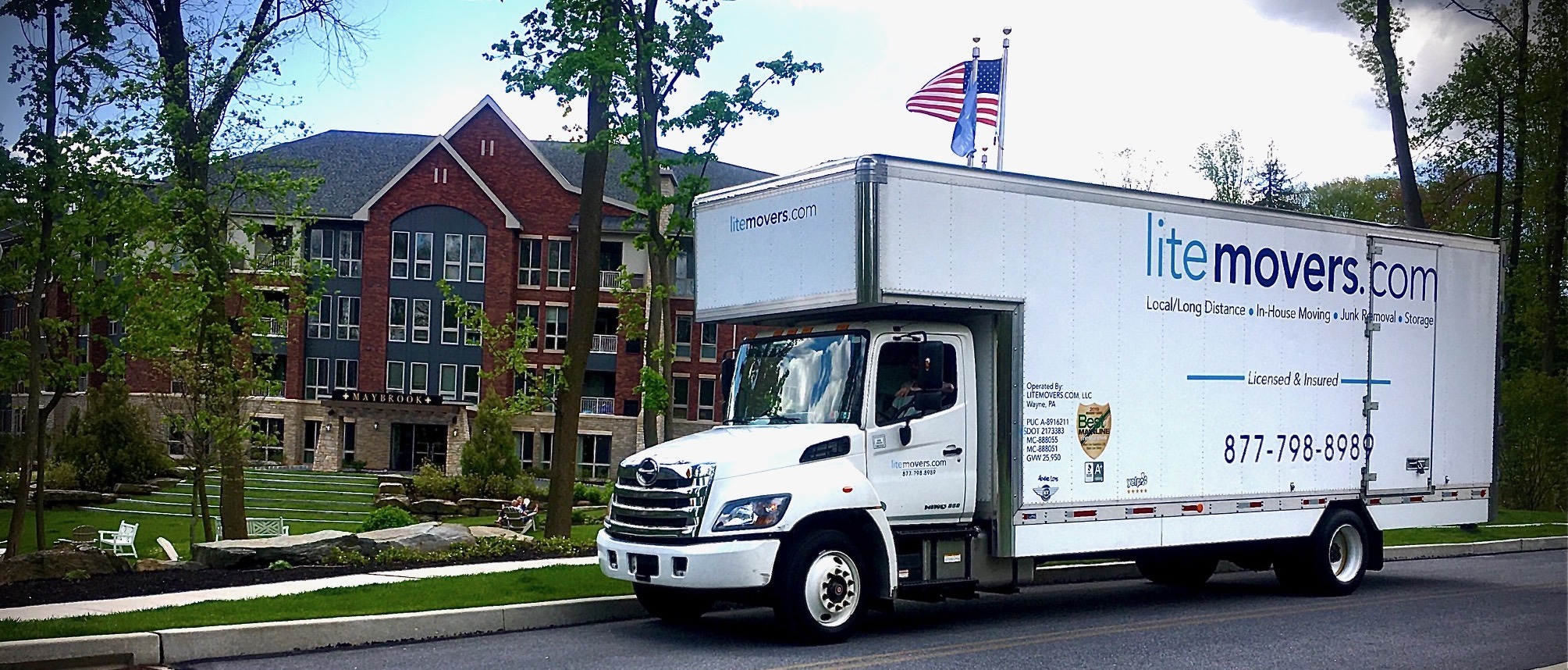
Selling the House? What Does the Final Walkthrough Expect?
An empty, broom-clean house with every included item still in place. The buyer walks it about 24 hours before settlement, and what they find in those 30 minutes decides whether closing happens on time. Movers out, junk gone, the light bulbs and the curtain rods the contract promised still there.
This is the part of the month before moving that sellers plan last and should plan first. If the truck loads on settlement day, there is no window to clean. Load the day before, or two days before with a short storage hold, and the walkthrough becomes a formality. The mistakes that fail one, and how to avoid them, are in final walkthrough before settlement.
Agents in Lower Merion, Tredyffrin and Haverford send us their sellers for exactly this reason. Our realtor partners page explains how we coordinate around settlement dates. If the dates do not line up at all, a short stay in our King of Prussia warehouse bridges the gap.
How Does LiteMovers Fit Into the Month Before Moving?
We come in at week four with the estimate and stay through the walkthrough. A LiteMovers estimator walks the house, confirms the access at both ends, flags anything the truck cannot carry, and puts the plan in writing. From there the month before moving is a checklist you already own.
LiteMovers is licensed by the Pennsylvania Public Utility Commission under PA PUC A-8916211. Our office is at 307 East Church Rd, Suites 1 & 2, King of Prussia, PA 19406. Questions about what an estimate covers are answered in our estimate FAQs. The PA PUC mover page explains what a licensed carrier owes you on an in-state move.
Questions We Hear Every Week About the Month Before Moving
Is one month before moving enough time to plan?
Yes for most local moves, if the sorting starts on day one. A full basement or a long-distance move needs six to eight weeks, so start the cleanout before the month begins.
What should I do first in the month before moving?
Decide what is not coming with you. Every other step, from the box count to the estimate, gets easier and more accurate once that decision is made.
How far ahead should I book movers in the Philadelphia suburbs?
Four weeks is comfortable for most of the year. End-of-month dates and summer weekends fill first, so book those as soon as your settlement or lease date is set.
When should I stop buying groceries before a move?
About ten days out. That gives you time to eat down the freezer before the refrigerator has to be emptied and unplugged 24 hours ahead of the truck.
Can LiteMovers handle the cleanout, packing and move together?
Yes. One estimate can cover the donation and junk runs, room-by-room packing and the move itself. Short-term storage in King of Prussia is available if your dates do not line up.
Ready to put the month before moving on paper? Call LiteMovers at (610) 755-5535, toll-free 1-877-798-8989, or email moves@litemovers.com for a written estimate. PA PUC A-8916211 • USDOT 2173383 • MC-888055.

Comments are closed.