

Yes, you can move a sectional yourself, but only after you measure the path, remove the legs, and split the pieces. Most damage happens at tight turns, not on the truck. Measuring doorways, stairwells and landings first tells you whether the sofa fits, or whether a crew should take it apart.
Need a hand with a big sofa? Get a written estimate from LiteMovers.
Call (610) 755-5535 or request a written estimate.
How Do You Move a Sectional Without Damaging Your Walls?
The short answer is to treat it as several smaller pieces. A sectional looks like one sofa, but it is really two to five heavy sections joined by brackets or clips. When you move a sectional one section at a time, each piece clears corners that the whole sofa never could.
Start by clearing the route. Pull up runners, take pictures off the walls, and open every door fully. Then separate the sections, remove the legs, and wrap each one in a moving blanket. Wrapping protects the fabric and also pads the wall at every pinch point.
What Should You Measure Before You Move a Sectional?
Before you move a sectional, measure the sofa and the path, in that order. Write the numbers down so you are not guessing at the top of a stairwell. Here is the quick checklist crews use:
- Measure the height, depth and length of the largest single section.
- Measure every doorway at its narrowest point, including the hinge side.
- Check the stairwell width, ceiling height and any landing turn.
- Look for railings, light fixtures and low beams along the route.
- Confirm where the truck can park and how far the carry is.
If the largest section is wider than the narrowest opening, tilt it on its end or side. If tilting does not work, the sofa needs more disassembly or a different exit, such as a window or balcony. That is a judgment call, so ask a crew before you try it.
Why do rowhomes and older Main Line stairs cause trouble?
Philadelphia rowhomes often have narrow front doors and steep, boxed-in staircases with a tight turn halfway up. Older Main Line homes in places like Bryn Mawr and Ardmore add plaster walls and original woodwork that scuff easily. In both cases, the plan to move a sectional is the same: smaller sections, careful angles, and padding on every edge.
How Do Movers Handle a Sectional in a Walk-Up or Apartment?
Apartment buildings add rules to any plan to move a sectional. Many require a freight elevator reservation, a certificate of insurance, or set move-in hours. Read the building rules before moving day, and review our Philly apartment move rules for what to ask your property manager.
On the street, a truck that cannot park close adds carrying distance, and carrying distance adds risk. In Philadelphia, you can apply for a temporary no parking permit so the truck can sit near your door. Suburban townships have their own rules, so check with Lower Merion Township parking services if you are moving on the Main Line.
What gear helps most when you move a sectional?
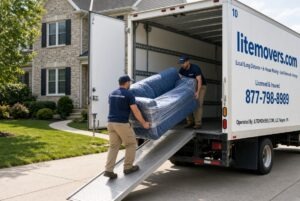
Furniture sliders, lifting straps, moving blankets and a hand truck do most of the work. Straps spread the weight across the shoulders, which lets two movers carry a section down stairs without bending at the waist. If you plan to move a sectional on your own, rent or borrow this gear first.
When Is It Smarter to Hire Pros to Move a Sectional?
Hire help when stairs, distance or weight turn the job into a safety risk. A sectional with recliners or a sleeper section can weigh far more than it looks. Here is a simple way to compare the two paths:
- Do it yourself when the route is flat, the doors are wide, and you have at least two strong helpers and the right gear.
- Hire a crew when there are stairs with a turn, an elevator reservation, a long carry, or a heavy sleeper or recliner section.
A crew that knows how to move a sectional also brings protection for the home. Floor runners, door-jamb guards and blankets keep your walls and your security deposit intact. For details on coverage if something goes wrong, read about moving valuation versus insurance. Our Main Line residential movers handle large sofas every week.
Planning to move other bulky pieces too? Our guide to how to move a china cabinet covers the same padding principles. And if you want help wrapping and boxing everything else, see our packing and storage services.
Pennsylvania consumers should also confirm that any mover is certified. The Pennsylvania Public Utility Commission shares consumer tips for hiring household movers. LiteMovers holds PA PUC certificate A-8916211.
Frequently Asked Questions
Can two people move a sectional up a staircase?
Two people can handle a small sectional section if the stairs are straight and wide. Tight turns, low ceilings and heavy sleeper sections usually call for a trained crew with straps and sliders.
Should I take the legs off a sectional before moving it?
Yes. Legs snag on door frames and carpet edges. Unscrew them, bag the hardware, and tape the bag to the underside of the section so nothing gets lost.
Will movers take a sectional apart if it will not fit?
Movers can separate connected sections, remove legs and, on some pieces, detach backs or arms. They will not cut or force a frame. If a piece truly cannot pass, they will tell you before anything gets damaged.
How should I protect a sectional on moving day?
Wrap each section in a moving blanket, then add stretch wrap over the blanket to keep it in place. Never wrap fabric directly in plastic for long, because trapped moisture can cause odor and mildew.
Ready to Move a Sectional the Smart Way?
Do not wait until moving day to find out the sofa will not clear the turn. Tell us about your stairs and doorways, and we will plan the carry before the truck arrives. Whether you move a sectional across town or across the state, a written plan beats guesswork.
Talk to LiteMovers about your move today.
Call (610) 755-5535 or request a written estimate.