

Packing a house usually takes one to two weeks of evenings if you do it yourself. A trained packing crew can pack most two- and three-bedroom homes in one day. The keys are the right supplies, a room-by-room plan, and extra care for the kitchen and fragile items.
Below are clear answers to the five packing questions people ask most. Each one links to a deeper LiteMovers guide. Use it as your checklist for packing a house from the attic to the garage.
Short on time for packing a house?
Our crews pack one room or the whole home. Get a written estimate for full or partial packing.
Questions in this guide
How Long Does Packing a House Take?
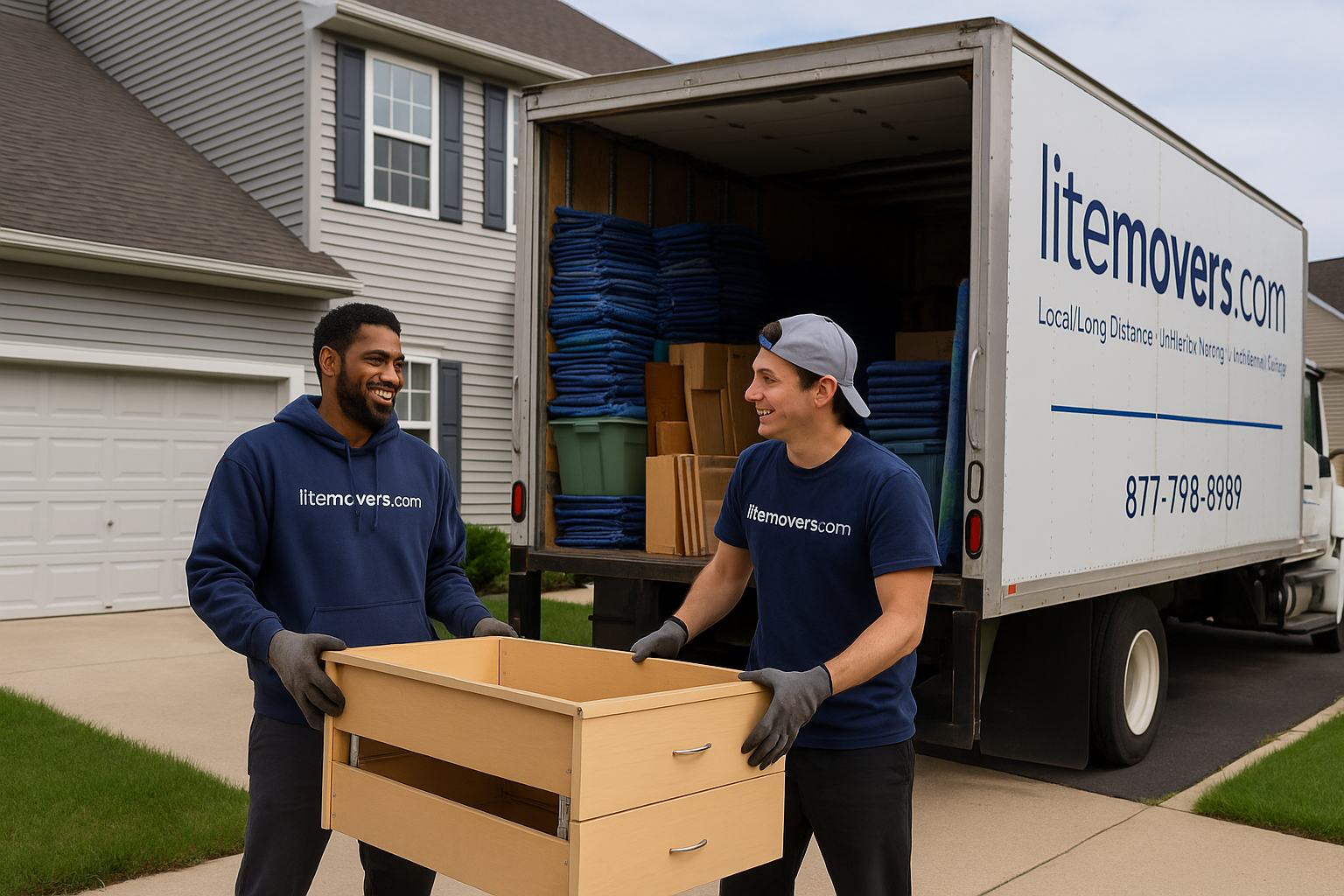
Short answer: Packing a house on your own takes about one to two weeks of steady evening work for a two- or three-bedroom home. A professional crew packs most homes that size in one day. Larger homes, full basements, and big collections can add a second day.
Your timeline depends on three things: how much you own, how fragile it is, and how many hours you can give it each day. Kitchens take the longest. Closets and bookshelves go fast.
A simple packing timeline
- Three weeks out: Pack books, decor, and off-season clothes.
- Two weeks out: Pack guest rooms, the basement, and the garage.
- One week out: Pack most of the kitchen and dining room.
- Two days out: Pack bedrooms and bathrooms, except daily items.
- Moving day: Pack your first-night box and strip the beds.
If you have only a weekend, think about help. A crew can handle the hard rooms while you focus on personal items. That is often the fastest way to finish packing a house on a tight schedule.
Go deeper: Our room-by-room packing guide
What Packing Supplies Are Essential for Moving?
Short answer: The essentials are sturdy boxes in several sizes, packing paper, bubble wrap, strong packing tape, a tape gun, and markers. Add dish packs for the kitchen, wardrobe boxes for closets, and mattress bags. Skip used grocery boxes for heavy items, because they crush and tear.
Use small boxes for heavy things like books and canned goods. Use large boxes for light things like pillows and lampshades. This one rule prevents most broken boxes when packing a house.
- ✓Small, medium, and large moving boxes
- ✓Dish packs with cell dividers for glasses
- ✓Plain packing paper, not newspaper, which leaves ink stains
- ✓Bubble wrap for electronics and art
- ✓Wardrobe boxes for hanging clothes
- ✓Mattress and sofa bags
- ✓Packing tape, a tape gun, and thick markers
Not sure how many boxes you need for packing a house? Our moving supplies checklist and supplies-by-room list break it down.
Go deeper: Different packing boxes and their uses
How Do You Efficiently Pack Kitchen Items for Moving?
Short answer: Pack the kitchen in stages. Start with items you rarely use, like party platters and extra glasses. Wrap each plate and stand it on its edge in a dish pack. Use cell dividers for glasses. Keep one box of daily dishes, a pan, and coffee gear for the last day.
The kitchen is the hardest room when packing a house. It has the most items, the most glass, and the most odd shapes. Give it more time than you think.
- ✓Stand plates on edge, like records in a crate
- ✓Fill gaps with crumpled paper so nothing shifts
- ✓Pack knives in a towel and mark the box
- ✓Tape lids to pots, or nest pots by size
- ✓Use up or give away open food before moving day
- ✓Empty, clean, and dry the fridge a day ahead
Go deeper: How to pack a kitchen for a move
Want to see it done? Watch our dish and wine glass packing video.
Can Professional Movers Handle Fragile Items Safely?
Short answer: Yes. Professional movers handle fragile items safely by using the right materials and methods. They double-wrap glass, use dish packs and picture cartons, and build custom crates for marble, glass tops, and art. Most damage happens in owner-packed boxes, not crew-packed ones.
Fragile items are where packing a house goes wrong most often. They need three layers of care: a good wrap, a snug box, and careful loading. Heavy boxes go low in the truck. Fragile boxes ride on top, never under a dresser.
Some items should not go on the truck at all. Keep jewelry, cash, passports, and medicine with you. Our what not to pack guide covers the full list.
Paint, propane, and pool chemicals can’t ride on a moving truck. Pennsylvania counties run household hazardous waste collection programs where you can drop them off before packing a house.
Go deeper: How to pack large pictures and mirrors
What Furniture Moving Tools Are Most Effective?
Short answer: The most effective furniture moving tools are thick moving pads, a four-wheel dolly, an appliance hand truck, lifting straps, and stretch wrap. Floor runners and door jamb guards protect the home. A basic tool kit helps you take apart beds, tables, and desks.
Pads and stretch wrap protect furniture. Dollies protect your back. Floor runners protect hardwood. Each tool solves a different problem, and pros use all of them on every job.
- ✓Moving pads and stretch wrap for every wood piece
- ✓Four-wheel dolly for dressers and boxes
- ✓Appliance hand truck for fridges and washers
- ✓Lifting straps for heavy, awkward items
- ✓Floor runners and door jamb guards
- ✓Screwdrivers, hex keys, and zip bags for hardware
If you have older hardwood floors, see our tips to move furniture without scratching hardwood. For a piano, call the pros. Our piano moving services use special boards and straps.
Packing a House in Main Line and Chester County Homes
Older homes in Bryn Mawr, Wayne, and Haverford often have built-ins, plaster walls, and tight back stairs. Plan to wrap banisters and measure doorways before packing a house like that.
Newer homes in Exton, Collegeville, and Downingtown often have big basements and three-car garages. Those spaces fill up over time. Start there first, and book a junk removal and donation pickup so you are not packing a house full of things you will not keep.
Prefer to hand off the job? Our packing services cover one room, one day, or the whole home.
Frequently Asked Questions
What should I pack first when moving?
Pack the things you use least. Start with off-season clothes, books, decor, guest room items, and storage closets. Leave the kitchen basics, bathroom items, and daily clothes for the last two days.
Should I label boxes by room or by contents?
Do both. Write the room name in large letters on two sides of the box. Then add a short list of what is inside. Movers use the room name, and you use the list when you unpack.
Can movers pack just my kitchen and leave the rest to me?
Yes. Partial packing is common. Many people pack books and clothes themselves and have the crew pack the kitchen, china, art, and lamps. Ask for partial packing when you request your estimate.
What items will movers not pack or carry?
Movers will not carry hazardous items such as propane, paint thinner, pool chemicals, or ammunition. You should carry cash, jewelry, medicine, and important papers yourself. Ask your mover for its full list.
Let us handle the hard rooms
From the kitchen to the china cabinet, LiteMovers makes packing a house easier. Call today or request an estimate.
LiteMovers · 307 East Church Rd, Suites 1 & 2, King of Prussia, PA 19406 · (610) 755-5535 · Toll-free 1-877-798-8989
Licensed and insured · PA PUC A-8916211 · USDOT 2173383 · MC-888055 · Family owned since 2007

Comments are closed.