

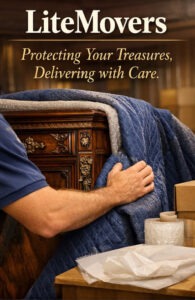
Moving presents one of the greatest challenges for collectors and antique enthusiasts: how to safely transport items that often carry not just monetary value, but profound sentimental and historical significance. Whether you’re relocating a Victorian furniture collection, rare books, vintage vinyl records, or inherited heirlooms, the stakes feel high—and rightfully so. A single mistake during the moving process can result in irreversible damage to pieces that may be irreplaceable.
At Litemovers, we’ve helped countless collectors move their most treasured possessions across the country. Through years of experience, we’ve learned what works and what doesn’t when it comes to preserving antiques during relocation. In this guide, we’ll share the strategies and best practices that will give you peace of mind throughout your move.
Assess Your Collection’s True Value
Before you move a single box, take time to honestly evaluate what you own. This goes beyond just knowing the purchase price—it means understanding the replacement cost, historical value, and condition sensitivity of each piece.
Create a Detailed Inventory
- Photograph every item from multiple angles
- Document dimensions, weight, materials, and any damage
- Write detailed descriptions that would help insurance adjusters
- Note any specialized care requirements (humidity-sensitive, light-sensitive, temperature-sensitive)
- Keep receipts, certificates of authenticity, and appraisals organized
This inventory serves dual purposes: it protects you during the move and helps establish value for insurance claims if needed. Many collectors find that the act of cataloging actually deepens their appreciation for their collection.
Obtain Proper Insurance Coverage
Standard moving insurance typically covers only a fraction of an antique’s actual value. If you own collectibles worth $5,000 or more, specialized insurance is non-negotiable.
Know Your Coverage Options
Full-value protection through a moving company covers replacement cost if items are damaged. However, for high-value collections, you’ll want to check with your homeowner’s insurance about:
- Scheduled personal property coverage for specific valuable items
- Coverage limits during the moving period
- What documentation is required to file claims
- Whether “in-transit” coverage applies
Some collectors invest in short-term specialized fine art and collectibles insurance for the duration of the move. While this adds cost, it provides comprehensive protection and often includes coverage for “mysterious disappearance” and damage from natural disasters.
Master Packing Techniques for Different Items
The packing method matters enormously. Different types of antiques require different approaches.
Furniture and Wood Pieces
- Wrap in moving blankets rather than plastic (plastic traps moisture)
- Use cardboard corners to protect edges from compression damage
- Never stack heavy items on top of delicate pieces
- Keep drawers and doors open or pack separately to prevent warping
- Remove legs, shelves, and detachable parts when possible
Fragile Collectibles (Ceramics, Glass, China)
- Wrap each piece individually in bubble wrap or kraft paper
- Use dish pack boxes with dividers—these sturdy boxes have built-in cell kits
- Fill all empty spaces with packing peanuts or crumpled paper
- Label boxes clearly as “FRAGILE—THIS SIDE UP”
- Never use newspaper directly on items; the ink can transfer
Books and Paper Items
- Pack books in small, sturdy boxes to prevent them from becoming too heavy
- Stand books upright rather than stacking flat (prevents spine damage)
- For rare or valuable books, consider museum-quality archival boxes
- Use acid-free tissue paper between pages of valuable volumes
- Keep humidity stable; extreme dryness can make paper brittle
Metal Items and Sculptures
- Wrap in moving blankets to protect finish from scratches
- Pad areas where pieces might touch each other
- Be cautious with bronze and copper—acidic materials can cause oxidation
- Store in a climate-controlled environment to prevent rust
Control Climate and Environment
Temperature and humidity fluctuations cause more damage to antiques than the physical act of moving itself. Wood expands and contracts, paint can peel, leather can crack, and metals can oxidize when exposed to unstable conditions.
During Transit
- Use climate-controlled moving trucks (worth every penny)
- Avoid leaving the truck parked in direct sunlight for extended periods
- Monitor temperature if possible, especially during summer or winter moves
- Never store boxes in unheated garages or storage units
During Storage
If your timeline requires short-term storage, demand climate control. Target ranges for most antiques:
- Temperature: 65-75°F
- Humidity: 40-55%
Avoid basements, attics, and exterior sheds entirely for valuable collections—these spaces are subject to dramatic temperature and humidity swings that can cause irreversible damage.
Hire Professional Movers Experienced with Antiques
This is not the time to hire the cheapest option. Professional movers who specialize in antiques and fine art understand the nuances of handling valuable items. According to Realtor.com’s guide to moving antiques, specialized movers should have:
- Experience handling items similar to yours
- Proper training in fine art and antique handling
- Access to climate-controlled vehicles
- Insurance that covers high-value items
- References from previous clients with comparable collections
When getting quotes, ask specifically about their antique handling experience. A reputable mover will be happy to discuss their process and provide examples of collections they’ve successfully relocated.
Prepare Your New Space
Before your collection arrives, make sure the destination is ready. This means:
- Testing climate control systems to ensure they maintain stable temperature and humidity
- Inspecting for any existing water damage, leaks, or moisture issues
- Installing proper shelving that can handle the weight of antiques without sagging
- Arranging for security measures if your collection represents significant value
- Planning display areas that protect items from direct sunlight (fading)
- Ensuring adequate ventilation to prevent dampness
The new location should be at least as climate-controlled and protected as your previous one—ideally better. If you’re downsizing and some of your collection will be in storage after the move, arrange for a proper climate-controlled unit with your preferred conditions.
Document the Arrival and Condition
As items are unloaded, inspect each one carefully. Document any damage with photographs immediately. Compare the current condition to your pre-move inventory photos. If any discrepancies appear, note them on the moving company’s inventory form before signing off on the delivery.
Keep detailed records of this inspection process. Should you need to file an insurance claim, this documentation will be essential to proving the damage occurred during the move.
Moving Forward with Confidence
Moving with antiques and collectibles requires planning, investment in proper protection, and often, expertise beyond what a standard moving company provides. But the good news? Thousands of collectors move their treasured items every year without damage. The difference between success and heartbreak comes down to preparation and choosing the right professionals.
Your collection represents more than just money—it represents your passion, your history, and often, your legacy. Treating your move with the seriousness it deserves ensures these irreplaceable items arrive safely in your new home, ready to be enjoyed for generations to come.
Ready to move your valuable collection with confidence? Litemovers specializes in handling high-value items with the care and expertise they deserve. Request a free quote today and let us help you relocate your treasures safely. Our team has decades of combined experience moving antiques, collectibles, and fine art across the country.
© 2026 Litemovers. All rights reserved.