

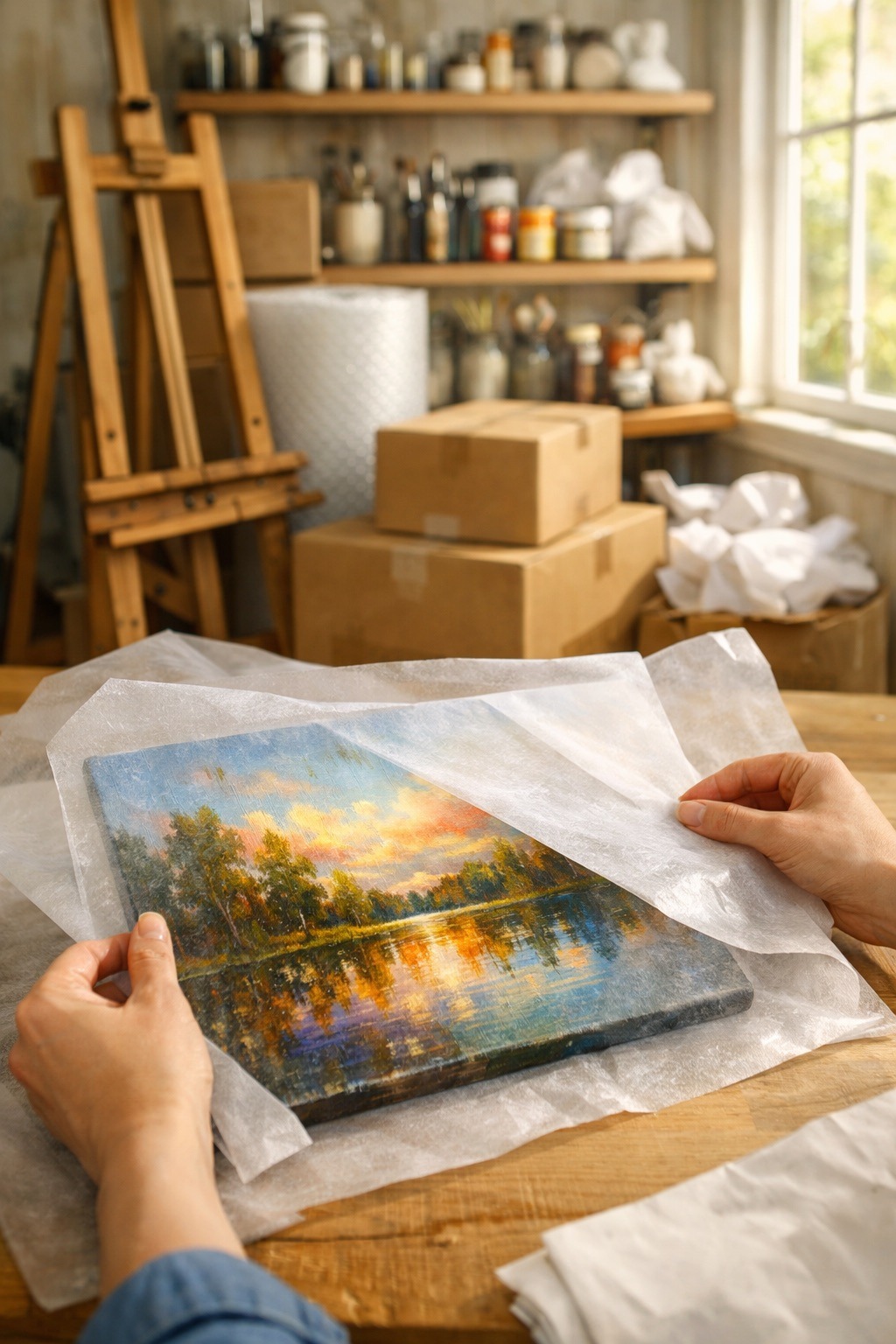
Your home art studio is more than a room with an easel. It is the place where ideas become tangible, where half-finished canvases carry weeks of layered effort, and where every shelf and drawer holds supplies you have collected over years of practice. When the time comes to relocate, the stakes feel uniquely personal. A cracked sculpture or a smeared painting is not just property damage — it is lost creative work that may be impossible to reproduce.
The good news is that moving a home art studio does not have to end in heartbreak. With the right preparation and a clear plan, you can transport everything from oil paints to pottery wheels without a single casualty. Here is how to do it well.
Take a Full Studio Inventory Before You Touch Anything
Before you reach for the packing tape, spend an afternoon documenting what you have. Walk through your studio with your phone camera and photograph every wall, shelf, and work surface. This visual record serves two purposes: it helps you plan packing materials, and it gives you a reference for setting up your new space.
Separate your inventory into categories. Finished artwork, works in progress, raw materials, tools and equipment, and hazardous supplies each require different handling. A tube of cadmium red and a finished watercolor painting may sit on the same table, but they belong in completely different boxes on moving day.
This is also the perfect time to declutter. Moving a home art studio is expensive enough without paying to transport dried-out supplies you will never use again.
Packing Finished Artwork: The High-Stakes Category
Finished pieces deserve the most careful treatment in your entire move. The approach depends on the medium.
Paintings on Canvas
For dry paintings, place a sheet of glassine paper over the painted surface to prevent scuffing. Never use regular plastic wrap directly against paint — it can stick and pull pigment off the surface, especially in warm weather. Build a simple sandwich of cardboard corners on all four edges, then wrap the entire piece in moving blankets.
If you have multiple framed canvases, pack them vertically in a mirror box or a telescoping picture box. Paintings should always travel upright, never flat. A flat stack of canvases turns the bottom piece into a pressure point for every painting above it.
Works on Paper
Watercolors, prints, and drawings need protection from moisture above all else. Place each piece in a clear archival sleeve, then sandwich it between two pieces of foam board cut slightly larger than the work. Tape the foam boards together at the edges and store them vertically in a flat file box or between sheets of rigid cardboard inside a sealed plastic bin.
Sculpture and Ceramics
Three-dimensional work is the trickiest to move safely. Each piece should be individually wrapped in acid-free tissue, then cushioned with bubble wrap. Protruding elements like arms or handles need extra reinforcement — wrap them separately, then secure them to the body of the piece with soft padding. Place sculptures in double-walled boxes, filling every gap with packing peanuts or crumpled kraft paper. The piece should not shift at all when you gently shake the box.
Handling Wet and In-Progress Work
This is where moving a home art studio gets genuinely tricky. A wet oil painting cannot be wrapped, stacked, or even touched on its surface. If you are in the middle of a piece, you have a few options.
The simplest is to let the work dry before moving day. Oil painters should plan at least two to three weeks of drying time for thickly applied paint. If that timeline does not work, transport wet canvases in specially designed wet-canvas carriers — essentially open-faced boxes that hold the canvas by its stretcher bars without touching the surface. You can build a DIY version using wooden spacers screwed into a plywood base.
For mixed-media work with fragile attached elements, photograph the current state in detail so you have a reference for restoration if anything shifts.
Moving Art Supplies and Hazardous Materials
Artists work with an unusually wide range of chemicals. Turpentine, mineral spirits, spray fixatives, resin components, and certain pigments are classified as hazardous materials, and many moving companies will refuse to transport them. The Federal Motor Carrier Safety Administration (FMCSA) regulates the transport of hazardous materials for good reason — a leaking container of solvent in a hot moving truck is a genuine safety risk.
Check every container in your studio against your mover’s prohibited items list. Most professional movers will not transport flammable liquids, aerosol cans, or corrosive chemicals. You have two practical options for these items: transport them yourself in a well-ventilated vehicle with secure, upright storage, or dispose of them responsibly and purchase replacements after your move.
For supplies that are safe to ship, pack liquids in sealed plastic bags inside a plastic bin, standing upright. Dry pigments should be sealed in their original containers and cushioned to prevent cracking. Brushes and palette knives travel well in rolled canvas tool wraps or rigid tubes.

How to Move a Home Art Studio Without Destroying Your Work
Heavy Equipment: Easels, Pottery Wheels, and Presses
Large studio equipment requires a different strategy than artwork. A pottery wheel or a printing press is heavy, awkward, and full of precision-calibrated components.
Start by photographing the setup of each piece of equipment, including cable routing, adjustment positions, and any removable parts. Disassemble what you can, and label every bolt, knob, and bracket with painter’s tape and a permanent marker. Store small hardware in labeled zip-lock bags taped to the main body of the equipment.
Pottery wheels should have their wheel heads removed and wrapped separately. The motor housing needs protection from dust and impact — wrap it in moving blankets and secure it with ratchet straps on the truck. Wooden easels can usually be folded and wrapped in blankets, while metal easels with adjustable mechanisms should have those mechanisms locked in position to prevent bending during transit.
Climate Considerations for Art in Transit
Temperature and humidity matter enormously when you are moving artwork. Spring moves — like those happening right now in March — come with particular risks. Temperature swings between cold mornings and warm afternoons can cause condensation inside wrapped paintings, and spring rain adds moisture to everything.
If possible, transport your most valuable and sensitive pieces in a climate-controlled vehicle. At minimum, avoid leaving packed artwork in an unheated truck overnight. Oil paintings are especially vulnerable to cold; temperatures below 40 degrees Fahrenheit can cause paint layers to become brittle and crack.
Acrylic paintings face the opposite problem — they soften in heat and can stick to protective coverings. Keep acrylics away from direct sunlight and heat sources during the move.
Setting Up Your New Studio Space
Resist the urge to unpack everything at once. Start with your most critical work surface and a single project. Let yourself get familiar with the light in your new space before committing to a permanent layout.
Pay attention to the quality and direction of natural light — it may be completely different from your old studio. North-facing windows give the most consistent light for painting, but any large window can work with the right setup. Spend a full day observing how light moves through the room before you position your primary easel or work table.
Install your storage systems early. Shelving, flat files, and drying racks should go up before you start unpacking supplies, so everything has a destination from the moment it comes out of a box.
Finally, give yourself grace. A new studio takes time to feel like home. Your creative rhythm may feel off for a few weeks, and that is completely normal.
Let the Professionals Handle the Heavy Lifting
Moving a home art studio is one of the most specialized residential moves there is. Between fragile artwork, hazardous chemicals, and heavy equipment, there are too many variables for a DIY approach to feel comfortable.
At Litemovers, we understand that your studio is not just a collection of objects — it is your livelihood and your passion. Our team has experience handling delicate, high-value, and oversized items with the care they deserve. We will work with you to build a custom moving plan that accounts for every canvas, every tool, and every irreplaceable piece in your collection.
Ready to move your studio with confidence? Contact Litemovers today for a free, no-obligation quote. Let us take the stress out of your move so you can focus on what you do best — creating.
© 2026 Litemovers. All rights reserved.