

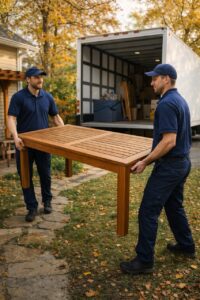
Winter is coming — and if you’re a homeowner in the Philadelphia suburbs, that means it’s time to think about protecting your outdoor investment. Quality patio furniture doesn’t come cheap. Whether you have a teak dining set on the Main Line, a sectional sofa on a Chester County deck, or cast iron chairs surrounding a fire pit in Bucks County, the right winter storage strategy can add years to the life of your furniture and save you hundreds — or thousands — of dollars in replacements.
At LiteMovers, we’ve been helping Philadelphia-area families move, pack, and store their most valued possessions since 2007. We know a thing or two about protecting furniture from the elements. Here’s our complete guide to winter patio furniture storage.
Why Winter Storage Matters (Even in Philly)
The Philadelphia region gets the full force of Northeast winters — freezing temperatures, ice, snow, freeze-thaw cycles, and damp conditions that can wreak havoc on outdoor materials. Here’s what happens to unprotected patio furniture over a Pennsylvania winter:
- Wood dries out, cracks, and warps. Teak, cedar, and eucalyptus can lose their finish and structural integrity without protection.
- Metal rusts and corrodes. Aluminum, wrought iron, and steel are all vulnerable to moisture-driven oxidation.
- Wicker and resin weaken. UV exposure combined with cold can make synthetic wicker brittle and prone to cracking.
- Fabric mildews and fades. Cushions and slings that stay wet through winter often develop mold, mildew, and permanent staining.
- Plastic becomes brittle. Cold temperatures accelerate the breakdown of plastic components, making them snap under weight or pressure.
Step 1: Clean Everything Before You Store It
This is the step most homeowners skip — and it’s the most important one. Storing dirty furniture traps moisture, accelerates mold growth, and can permanently stain or etch surfaces.
- Wood furniture: Use a mild soap and water solution with a soft-bristle brush, then allow it to dry completely — ideally two or three sunny days — before storage. For teak, consider applying a teak protector or sealer before storing.
- Aluminum and metal: Wipe down with a damp cloth and dry thoroughly. For any rust spots on wrought iron, address them now with a rust-inhibiting primer before storage.
- Cushions and fabric: Follow manufacturer care instructions. Most outdoor cushion covers can go through the washing machine. Allow them to air dry fully before folding or bagging.
Pro tip from LiteMovers: Never store furniture that is even slightly damp. Trapped moisture in an enclosed space is the number one cause of mold, mildew, and material breakdown during storage.
Step 2: Disassemble What You Can
Tables with removable legs, sectionals that come apart, and umbrellas with detachable bases should all be broken down before storage. Disassembly serves two purposes: it reduces the footprint of each piece (important if you’re working with limited storage space) and it eliminates stress on joints and hardware that can cause warping or breakage under shifting winter loads.
Keep all hardware (bolts, screws, pins) in labeled zip-lock bags and tape them directly to the piece they belong to. Nothing is more frustrating than a spring reassembly with orphaned hardware.
Step 3: Choose the Right Storage Location
Where you store your patio furniture matters almost as much as how you prepare it. Here are your best options, ranked from most to least ideal:
- Climate-controlled storage unit — The gold standard. Stable humidity and temperature protect even the most sensitive materials all winter. LiteMovers can help coordinate professional moving and storage if you need help getting large pieces off your property.
- Attached garage — The next best option. Stays warmer than outdoors, protects from precipitation, and keeps wind and UV off your pieces. Make sure the garage doesn’t regularly flood or develop moisture issues.
- Dry basement — Works well for cushions, umbrellas, and smaller accent pieces. Avoid storing wood furniture in a humid basement — the moisture can cause just as much damage as leaving it outside.
- Shed or detached garage — Offers basic weather protection. Make sure the space is reasonably dry, well-ventilated, and free from rodent activity, which can damage cushions and wicker.
- Covered outdoor storage — The fallback when indoor space isn’t available. Requires high-quality weatherproof covers (see Step 4).
Step 4: Use Quality Furniture Covers — If You Must Store Outside
Sometimes there simply isn’t enough indoor storage, and outdoor covered storage becomes the best option. If that’s your situation, invest in high-quality, UV-resistant, water-resistant furniture covers — not the cheap tarps from the hardware store. Look for covers that are:
- Breathable to allow moisture to escape
- Fitted specifically to your furniture dimensions
- Secured with ties or elastic hems to prevent blowing off in winter wind
- Made from ripstop or heavy-duty polyester material
Even with good covers, elevate furniture off the ground if possible. Water pools on patios and decks during freeze-thaw cycles, and furniture sitting in standing water — even under a cover — will deteriorate.
Philadelphia-area tip: We get significant ice storms and heavy wet snow. Make sure covered furniture isn’t in a location where roof snow load or ice dams can drop onto it. The weight can permanently damage furniture frames.
Step 5: Cushion and Accessory Storage Best Practices
Cushions deserve special attention. After washing and fully drying:
- Store in breathable canvas storage bags — not plastic bags, which trap moisture.
- Stack them flat to avoid compression deformation.
- Keep in a climate-controlled space whenever possible.
Umbrellas should be closed, the canopy removed if possible, and the pole stored horizontally or in a padded bag. Store string lights and outdoor accessories in labeled bins inside your garage or basement.
When You Need More Help: LiteMovers Has You Covered
Sometimes the logistics of winter furniture prep go beyond what you can handle alone — especially if you have large sectionals, heavy cast iron pieces, or fragile high-end teak sets. LiteMovers has been helping Philadelphia-area homeowners with exactly these kinds of jobs since 2007.
We offer:
- Full-service packing and moving for storage transitions
- White-glove handling for luxury and delicate outdoor furniture
- Short-distance moves to storage facilities throughout Montgomery, Chester, Delaware, and Bucks Counties
- Senior relocation services for homeowners transitioning to assisted living or downsizing
If you’re looking at a pile of heavy patio furniture and dreading the job, give us a call. We’ll handle the heavy lifting — literally — so your furniture is protected, your back isn’t, and your outdoor space is ready to shine again in spring.
Ready to get your outdoor space winter-ready?
Contact LiteMovers today for a free estimate.
Request a Free Quote →
LiteMovers | Greater Philadelphia Area | Serving Main Line, Montgomery, Chester, Delaware & Bucks Counties | PA PUC License A-8916211 | USDOT 2173383

Comments are closed.