

What a Local Move Really Means in the Philadelphia Suburbs
A move can feel local even when it crosses county lines, school districts, apartment complexes, or senior communities. That is why the best local moving plan should not stop at mileage. LiteMovers looks at access, timing, inventory, packing needs, storage, stairs, elevators, and the real-world route between your old and new home.
Why Mileage Alone Does Not Tell the Whole Story
Two moves can show the same mileage on a map and still play out very differently. A short hop with a fourth-floor walk-up, a tight loading dock, and antique furniture takes far longer than a longer drive between two open suburban driveways. The right plan starts with what is at each end, not the dotted line in between.
LiteMovers crews are trained to read both addresses before move day. That keeps the schedule realistic and the move calm.
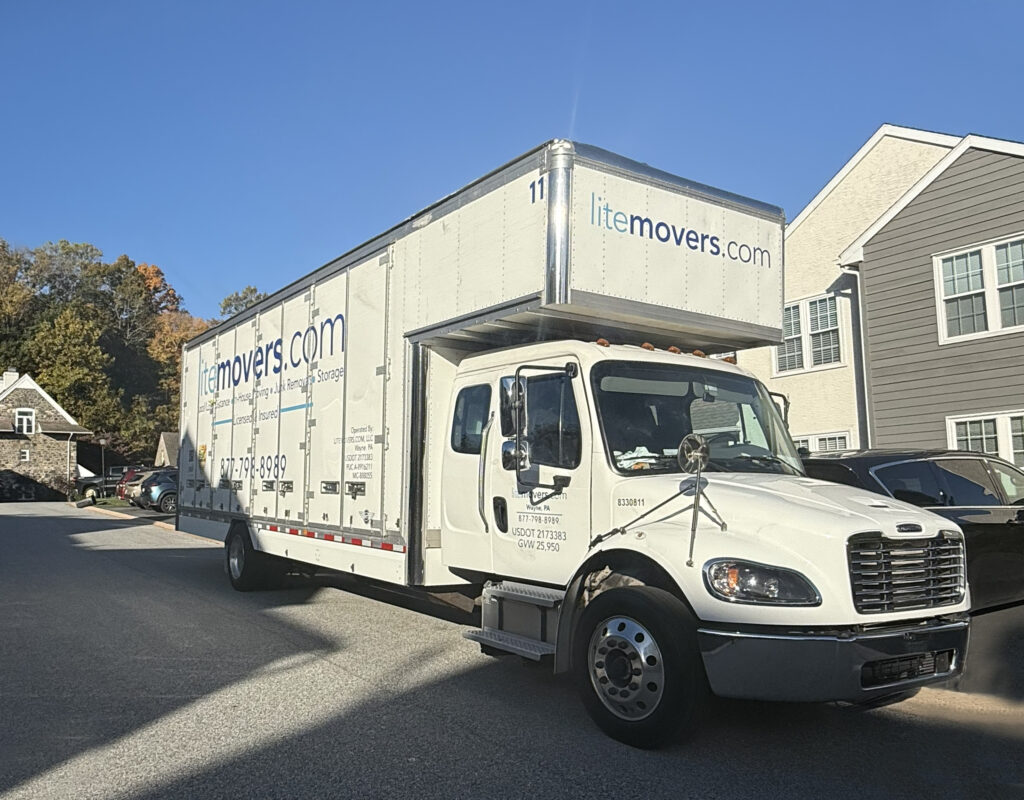
Local Moves Across Philly and the Surrounding Counties
Local moves in our area often cross between Philadelphia and the Main Line, Chester County, Delaware County, Montgomery County, and Bucks County. Each county brings different streets, parking, and home styles. A local Philadelphia move into a King of Prussia condo or a West Chester home can be planned as a single-day move with careful crew sizing.
Apartment-to-House and House-to-Apartment Local Moves
- Apartment-to-house: more setup time, larger placement plan, careful unloading order
- House-to-apartment: downsizing decisions, donations, building rules, elevator reservations
- Condo-to-condo: COI paperwork, parking permits, two sets of building managers
- House-to-house: protection on both sets of stairs, banisters, floors, and doorways
Local Moves With Storage
Storage is a normal part of many local moves. A buyer may close on the new home a week after the old one. A renovation may run two extra weeks. A senior move may need staging time before the new community can take everything. LiteMovers handles packing, moving, and storage as one connected service.
Questions to Ask Before Booking a Local Mover
- Are you licensed by the PA PUC and registered with USDOT?
- How do you protect floors, doorways, banisters, and walls?
- Do you supply pads, wrap, and shrink for furniture?
- How are extra stops, stairs, or long carries handled?
- Do you offer storage if my closing dates shift?
- Are your crews family-owned and locally based?
Need help choosing the right Philadelphia mover?
Our guide walks through what to ask, what to confirm, and what to watch for before you book.
Get a real local moving plan
We do not quote sight unseen. Call us or schedule a quick walkthrough so the plan matches your home.
Frequently Asked Questions
Is a move under 20 miles automatically a local move?
Mileage is only one factor. A move can stay under 20 miles and still cross multiple townships, school districts, building types, and access challenges. A 12-mile move from a Center City high-rise to a Main Line home may take longer and need more planning than a 30-mile move from one suburban garage to another. LiteMovers builds the plan around the full picture, not just the distance.
Do local moves cost less than long-distance moves?
Local moves are usually billed by the hour under the PA PUC tariff, while interstate moves are billed by weight and distance. Cost depends on crew size, truck size, packing, stairs, elevators, parking, and total time on the job. A short local move with heavy access challenges can take more hours than a clean longer haul. We do not quote pricing on this page, but we walk every customer through how the tariff structure applies before they book.
Does LiteMovers move from apartments to houses locally?
Yes. Apartment-to-house moves are very common in the Philadelphia suburbs. Renters move into first homes in Chester County, Delaware County, Montgomery County, and Bucks County. The plan covers building access, elevator use, COI requirements, and proper unloading at the new home. We pack, protect, and place items to make the first night livable, not chaotic.
Can a local move include storage?
Yes. Local moves often include short-term or long-term storage. Common reasons include closing date gaps, renovations, downsizing, and senior moves into smaller spaces. LiteMovers can load the truck, transfer items into protected storage, and redeliver later. This avoids double-handling at a self-storage unit and keeps the inventory organized.
How far in advance should I book a local move in the Philadelphia suburbs?
Three to four weeks is a comfortable window for most local moves. Peak weekends, end-of-month dates, and spring through early fall fill up faster. We can sometimes accommodate shorter notice, but the choice of crews and trucks is wider when you book early. Reach out as soon as your move date is firm so we can hold the slot.
Family-owned. Locally crewed.
PA PUC A-8916211 · USDOT 2173383 · In business since 2007.

Comments are closed.