

Storage in transit is temporary warehouse storage your mover holds under your bill of lading when your new home is not ready on delivery day. On a long-distance move out of the Philadelphia suburbs, your shipment stays inventoried in the warehouse. It then continues to its destination under the same contract.
Closing date slipping on an out-of-state move? Call LiteMovers at (610) 755-5535 or ask for a written estimate that spells out your storage plan before you pack a single box.
What Is Storage in Transit on a Long-Distance Move?
Storage in transit, often shortened to SIT, is a pause in the middle of your move. Your goods are picked up, inventoried, and carried to a warehouse instead of straight to the new address. They wait there until you are ready. Then the same carrier delivers them under the original bill of lading.
The key word is transit. Legally, the move never ended. Your shipment is still travelling, just very slowly. That distinction shapes how the goods are handled, who is responsible for them, and what paperwork you sign. The FMCSA explains storage in transit in plain language for interstate shipments.
How Is Storage in Transit Different From a Self-Storage Unit?
People often assume the two are interchangeable. They are not. Here is the short version:
- Who handles it. With storage in transit, the moving crew loads, seals, and unloads your goods. With a rented unit, you usually do that work twice.
- The inventory. SIT keeps the numbered inventory from pickup day. A self-storage unit has no inventory at all.
- The contract. SIT stays on your bill of lading. A rented unit is a separate lease in your name.
- Protection. The valuation you chose for the move continues through storage in transit. Self-storage insurance is a different product entirely.
- Access. Warehouse vaults are not built for browsing. A rented unit is open whenever the gate is.
Neither option is automatically better. If you need weekly access to a bicycle and a filing cabinet, rent a unit. If a whole house has to sit somewhere safe for six weeks, storage in transit is usually the cleaner answer. Our packing and storage options cover both directions.
When Do Philadelphia-Area Families Need It?
Settlement dates that refuse to line up
This is the classic case. A family in Wayne settles on their Main Line house on a Friday. The house they bought outside Charlotte does not settle for eleven days. They cannot camp in an empty living room with a sofa, so the load goes into the warehouse and rides south later. We see the same pattern on moves where a sale and a purchase drift apart every spring.
Long-distance timing out of Chester and Montgomery County
Interstate delivery happens inside a window, not on a single guaranteed hour. A load leaving Exton, Downingtown, or Blue Bell for Georgia or the Carolinas may be routed with other shipments. If the receiving end is not ready, storage in transit keeps everything protected instead of parked on a truck. Families planning long-distance moves from the Philadelphia area should raise this at the estimate stage, not the week of.
Downsizing that outruns the calendar
Senior moves often involve a house that sells quickly and a community apartment that opens later. Sorting decades of belongings takes longer than any listing agent predicts. Warehouse time buys breathing room, which is why it comes up so often when we are helping seniors relocate and downsize.
7 Storage in Transit Tips You Should Know Now
- Raise it before the survey ends. Storage in transit planned in advance is orderly. Storage arranged from a driveway at 4pm is not.
- Pack a first-week box and keep it with you. Medications, chargers, tools, court and school records, pet supplies. Anything you would hate to wait on stays in your car.
- Ask how long the goods can stay. Every carrier has a limit before storage converts to a different arrangement. Get the date in writing.
- Confirm your valuation carries through. Protection during storage in transit should be documented, not assumed.
- Keep the inventory sheets. Those numbered tags are how you verify nothing wandered off at delivery.
- Skip anything perishable or pressurized. Warehouses will not take propane, paint, or the contents of the freezer.
- Give the destination address early. Delivery scheduling out of storage moves faster when the crew already has the details.
What Happens to Your Belongings in the Warehouse?
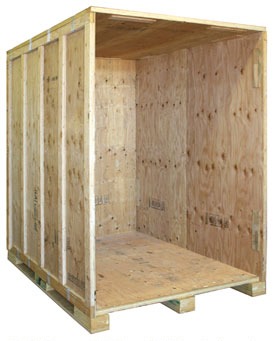
Furniture is pad-wrapped and loaded into wooden vaults, roughly the size of a small closet. Each vault is numbered and tied to your inventory. The vaults are stacked in a secured, dry building, not left on a trailer. Oversized pieces that will not fit a vault are wrapped and stored separately on the floor.
LiteMovers handles this work at our own facility at 307 East Church Rd, Suites 1 and 2, King of Prussia, PA 19406. You can see how the vault system works inside our King of Prussia warehouse.
How Long Can a Shipment Stay in Storage in Transit?
Days to a few months, depending on the carrier and the shipment. What matters is the boundary. Federal rules require your mover to tell you in writing before storage in transit converts to permanent storage. That conversion changes the window you have to file a claim for loss or damage.
Ask two questions and write the answers down. How many days do I have? What happens on day one after that? A mover who cannot answer clearly is telling you something useful.
Which Paperwork Actually Protects You?
Four documents carry the weight on an interstate move with a storage stop:
- The written estimate. It should name storage as part of the plan, not a footnote.
- The bill of lading. Your contract of carriage, storage stop included.
- The inventory. Item-by-item condition at pickup and again at delivery.
- The valuation election. The coverage level you chose, in writing, before the truck loads.
Interstate moves are regulated by the FMCSA. LiteMovers operates under USDOT 2173383 and MC-888055, and holds PA PUC certificate A-8916211. Before you sign anything, read the Protect Your Move guidance and the PA PUC household goods carrier page. If you have questions about how written estimates work, ask them early.
Frequently Asked Questions About Storage in Transit
Can I get into my belongings while they are in storage in transit?
Usually not on short notice. Vaults are sealed and stacked, so retrieving one item means moving other vaults first. Some access can be arranged with advance notice, but plan as though the answer is no and keep essentials with you.
Does my valuation coverage continue while the goods are stored?
It should, because the shipment is still under the bill of lading. Do not assume it. Ask your mover to confirm in writing that the valuation you elected applies during the storage period and through final delivery.
What items cannot go into warehouse storage?
Perishable food, plants, propane tanks, gasoline, paint, aerosols, ammunition, and anything flammable or corrosive. Passports, jewelry, and irreplaceable documents should travel with you rather than going into any vault.
Is storage in transit only for interstate moves?
No. The same warehouse approach works for a local move across Montgomery County when a settlement slides. The regulatory framework differs, but the practical handling of vaults and inventory is the same.
Planning a Move With a Gap in the Middle?
Storage in transit is not a complication. It is a normal tool that lets a move follow your calendar instead of the other way around. The families it goes badly for are the ones who discover they need it on loading day. LiteMovers has moved and stored households across Chester County and the Philadelphia suburbs for years. We would rather plan for a storage gap than improvise around one. For more preparation reading, browse our moving tips library.
Get a written estimate that includes your storage plan.
Call (610) 755-5535 or toll-free 1-877-798-8989, or email moves@litemovers.com. LiteMovers, 307 East Church Rd, Suites 1 & 2, King of Prussia, PA 19406. PA PUC A-8916211 · USDOT 2173383 · MC-888055.

Comments are closed.