

Most people rent a storage unit one size too large, because size charts are written by facilities that benefit from the upgrade. Here is what actually fits, based on what our crews load and unload across Chester County, Delaware County, and the Main Line.
A studio fits in a 5×10. A 2-bedroom apartment needs a 10×10. A 2-bedroom house needs a 10×15. A 3-bedroom house needs a 10×20. A 4-bedroom house needs a 10×30 or a warehouse vault. Add one size if you are storing appliances or a dining set.
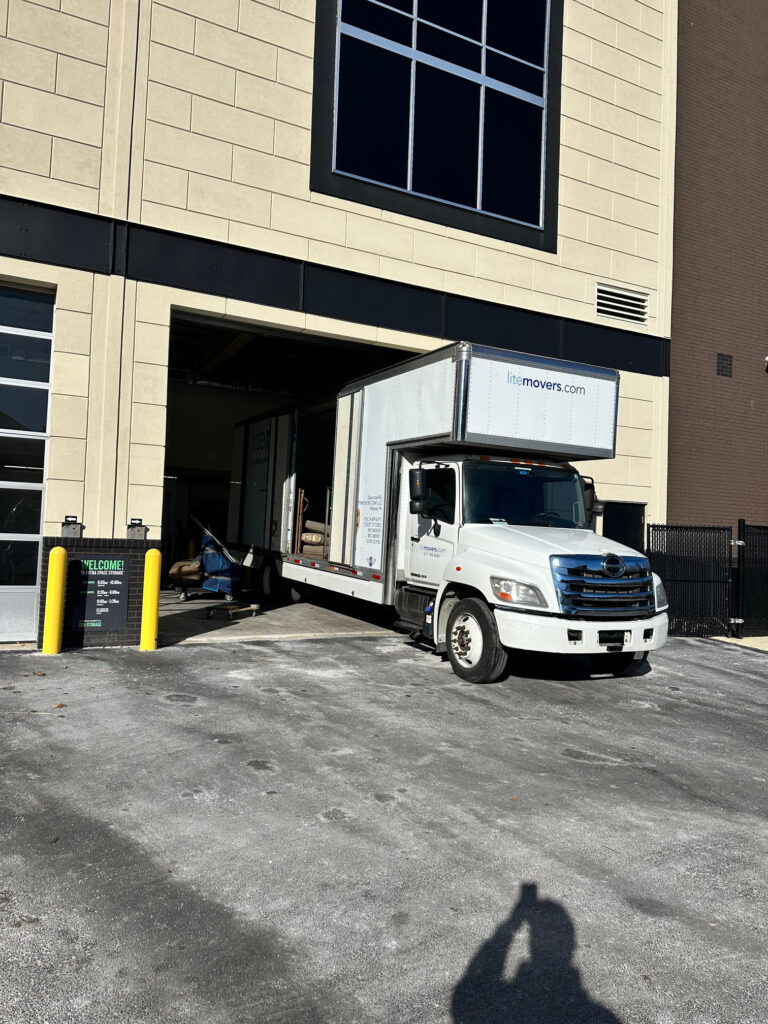
What size storage unit do I need?
Use the table below as a starting point, then adjust. The most common mistake is measuring by square footage alone. A unit is eight feet tall or more, so a well-stacked 10×10 holds far more than a poorly stacked 10×15.
| Unit size | Sq ft | Roughly equal to | Fits contents of |
|---|---|---|---|
| 5×5 | 25 | A large closet | Boxes, small furniture, seasonal items |
| 5×10 | 50 | A walk-in closet | Studio apartment, one bedroom set |
| 10×10 | 100 | Half a one-car garage | 1–2 bedroom apartment |
| 10×15 | 150 | A large bedroom | 2-bedroom house with appliances |
| 10×20 | 200 | A one-car garage | 3-bedroom house |
| 10×30 | 300 | A 1.5-car garage | 4–5 bedroom house |
Add one size up if you need to walk into the unit regularly. A packed-to-the-door 10×15 holds the same as a 10×20 you can walk through, but you cannot reach anything in it.
How do you know if you picked the wrong size?
Three signals, all of which show up on load day rather than before it.
- ✓Too small: the crew is stacking above shoulder height without a clear aisle, or items are being left on the truck.
- ✓Too large: more than three feet of empty floor remains after everything is in and stacked to six feet.
- ✓Right size: contents reach roughly seven feet high with a narrow walkway to the back and no crushing at the bottom of any stack.
If you are unsure, have your mover do a walk-through first. Our estimators size storage from an in-home survey rather than a guess, which is the same survey that produces your moving estimate.
Do you need climate-controlled storage?
This is the question with the most bad advice attached to it. Climate control matters in the Delaware Valley because our summers are humid and our winters swing hard. A non-climate unit in Malvern can run above 100 degrees in July and drop below freezing in January.
Wood expands and contracts with that swing. Joints loosen, veneer lifts, and finishes cloud. Humidity above 60 percent is where mold begins on upholstery and paper.
| Item | Climate control? | Why |
|---|---|---|
| Solid wood furniture | Yes | Joints separate with humidity swings |
| Upholstered sofas and chairs | Yes | Fabric holds moisture, mold risk |
| Mattresses | Yes | Absorb humidity, hard to dry out |
| Electronics and TVs | Yes | Condensation damages internal components |
| Artwork and photographs | Yes | Warping, sticking, and fading |
| Musical instruments | Yes | Wood movement ruins tone and tuning |
| Documents and books | Yes | Pages cockle and mildew |
| Leather goods | Yes | Cracks when dry, molds when damp |
| Metal shelving and tools | No | Only needs to stay dry |
| Patio and outdoor furniture | No | Built for exterior conditions |
| Plastic storage bins | No | Unaffected by normal swings |
| Garden equipment | No | Drain fuel first, then standard is fine |
Rule of thumb: climate control anything made of wood, anything that cost more than a few hundred dollars, and anything you cannot replace. Everything else can go standard.

Self storage vs. warehouse vault storage
Most people only know about self storage, so it is the default. For a household move with a gap between closings, warehouse vault storage is usually the better fit and often costs less for the same volume.
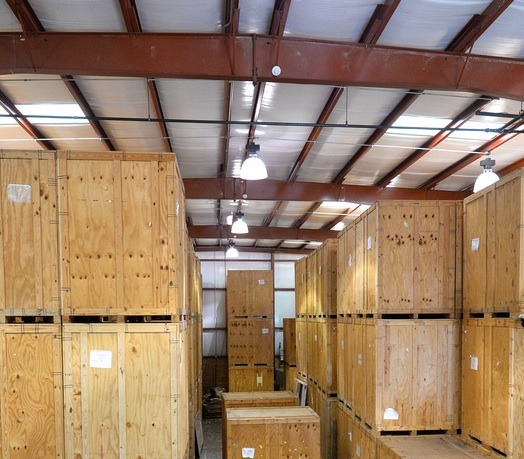
With vault storage, your goods are padded and inventoried at your home, loaded into wooden vaults, and sealed inside a secured warehouse. When you are ready, the same company delivers them.
| Factor | Self storage unit | Warehouse vault storage |
|---|---|---|
| Who loads it | You, or a crew you hire separately | Your moving crew |
| Times goods are handled | Four or more | Two |
| Access | Anytime, on your own | Scheduled through the company |
| Inventory | None, you track it | Itemized inventory list |
| Security | Facility gate and your padlock | Sealed vault in a secured warehouse |
| Climate | Optional upgrade | Warehouse-controlled environment |
| Best for | Ongoing access, gradual storage | Move gaps, renovations, downsizing |
The handling number is the one that matters. Self storage means loading a truck, unloading into the unit, reloading later, and unloading at the new home. Every handling is a chance for damage. Vault storage cuts that in half. Our Wayne warehouse holds household goods this way for customers between closings.
Warehouse storage is the right answer more often than people expect. If you are not planning to visit your belongings, you are paying for access you will not use.
How do you pack a storage unit correctly?
A unit is packed like a truck: heaviest and largest at the bottom and back, lightest at the top and front.
- Lift everything off the floor. Pallets or 2x4s under the first layer. Concrete wicks moisture upward year round.
- Leave two inches at the walls. Air needs to move behind the stack or you get condensation on the back items.
- Appliances first, against the back wall. Doors propped open, fully dry inside.
- Sofas on end where the frame allows it. This buys a surprising amount of floor space.
- Mattresses flat or upright against a wall, covered. Never resting on bare concrete.
- Boxes stacked heaviest on the bottom. No more than four high, labels facing the aisle.
- Keep a center aisle. Losing 18 inches of width is worth being able to reach the back.
- Photograph the finished unit. You will not remember what is behind the sofa in six months.
What can you not put in storage?
Every facility and warehouse prohibits these. They are safety and insurance rules, not preferences.
- ✓Gasoline, propane tanks, kerosene, and lighter fluid
- ✓Paint, thinner, solvents, and aerosols
- ✓Fertilizer, pool chemicals, and pesticides
- ✓Ammunition, fireworks, and explosives
- ✓Food of any kind, including sealed and canned
- ✓Live plants and anything perishable
- ✓Wet or damp items of any kind
- ✓Cash, jewelry, passports, and irreplaceable documents
Drain the fuel from mowers, trimmers, and generators before storage. Fuel left in a tank is the most common reason a load gets refused at the warehouse door.
How long can things stay in storage?
Climate-controlled storage holds household goods indefinitely with no meaningful degradation. Standard storage is a different story in this region.
| Duration | Standard storage | Climate controlled |
|---|---|---|
| Under 1 month | Fine for nearly everything | Fine |
| 1–3 months | Fine if outside summer | Fine |
| 3–6 months | Wood and upholstery at risk through a summer | Fine |
| 6–12 months | Expect finish and joint issues | Fine |
| Over 1 year | Not recommended for furniture | Fine with a wrap check |
Frequently asked questions
What size storage unit do I need for a 2-bedroom house?
A 2-bedroom house needs a 10×15 unit, about 150 square feet. That holds the contents of two bedrooms, a living room, a kitchen, and major appliances. If you are storing a dining set and a home office too, move up to a 10×20.
Do I need climate-controlled storage?
Climate control is worth it for wood furniture, upholstery, electronics, artwork, musical instruments, photographs, and documents. For metal shelving, tools, patio furniture, and plastic bins, standard storage is fine.
How long can furniture stay in storage?
Indefinitely, if the space is climate controlled and the furniture was wrapped properly. In a non-climate space, solid wood furniture begins to show joint movement and finish damage after one full summer in the Delaware Valley.
What is warehouse vault storage?
Vault storage means your belongings are padded, inventoried, and sealed inside wooden containers in a secured warehouse. You do not access it yourself. It costs less per month than self storage for the same volume and handles goods far less often.
Can I store a mattress in a storage unit?
Yes, in a sealed mattress cover, stored flat or on its side against a wall with airflow behind it. Never store a mattress directly on a concrete floor, because concrete transmits moisture upward.
What can you not put in a storage unit?
No flammables, propane tanks, gasoline, paint, fertilizer, ammunition, food, live plants, or anything perishable. Most facilities also prohibit tires and any item that could attract pests.
Is it cheaper to use a moving company for storage?
It depends on handling. Storage with your mover means one crew loads, stores, and delivers, so your goods are touched twice instead of four times. Fewer handlings means less damage risk, which is usually the bigger cost.
Related LiteMovers services
Not sure how much space you need?
We size storage from a real walk-through, not a guess. LiteMovers stores household goods in our Wayne warehouse for customers across the Main Line, Chester County, Delaware County, and Philadelphia.
Call (610) 755-5535Get a free estimate
LiteMovers · 307 East Church Rd, Suites 1 & 2, King of Prussia, PA 19406 · Toll-free 1-877-798-8989
PA PUC A-8916211 · USDOT 2173383 · MC-888055 · Fully licensed and insured

Comments are closed.