

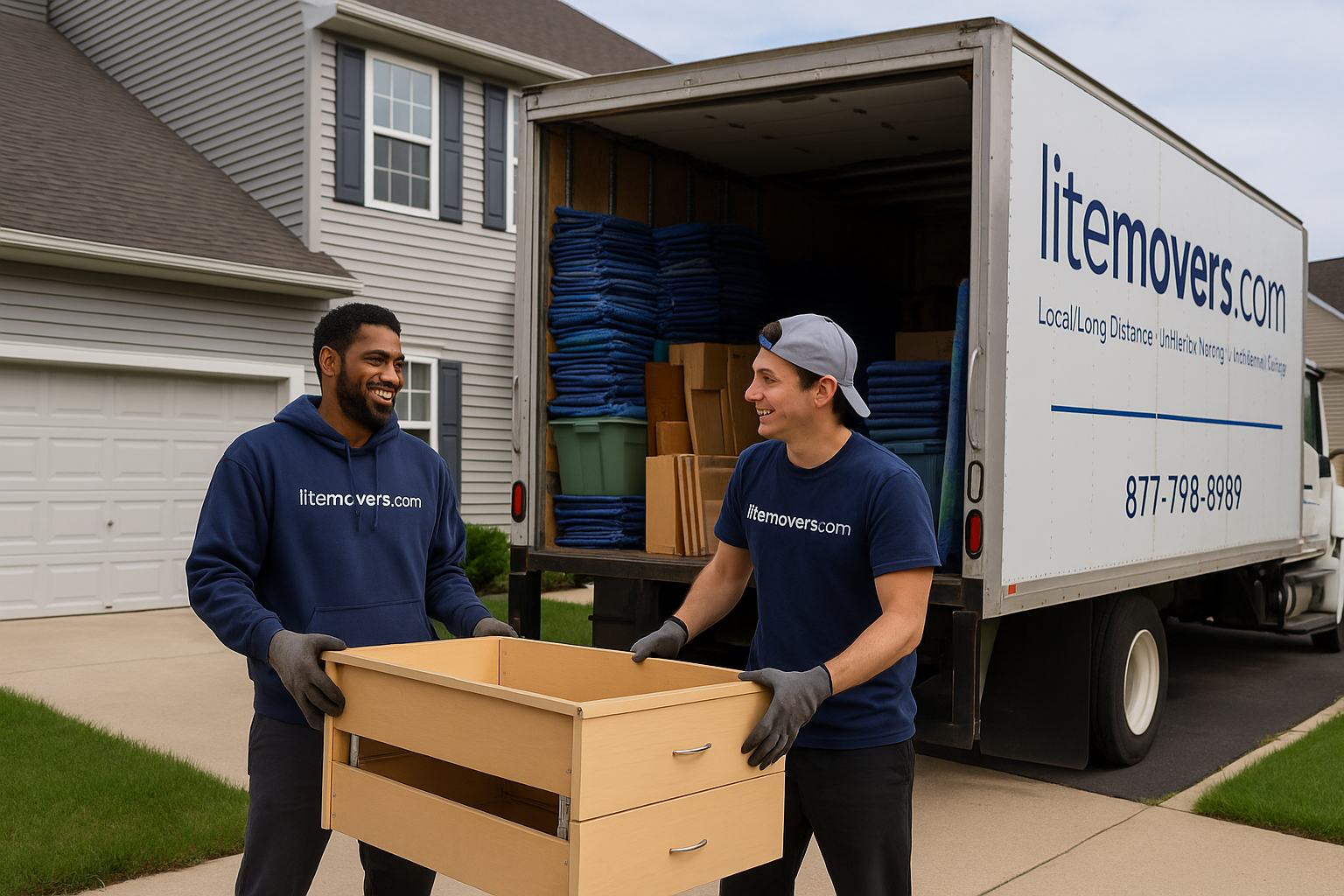
Every move turns up a few pieces you would rather not load onto the truck: the sofa that has seen better days, a spare dresser, the dining set that will not fit the new place. Deciding what happens to that furniture early is one of the easiest ways to lower your moving costs and your stress. The fewer items you move, the smaller the truck, the shorter the day, and the less you pay.
If you already know you want a hand sorting and clearing, you can call LiteMovers at 610-755-5535 or request a written estimate and we will walk through your options for the pieces you are leaving behind.
Start by sorting into four piles
Before you weigh donation versus disposal, give every piece a quick verdict. Walk room by room and put each item of furniture into one of four groups: keep, sell, donate, or remove. Be honest about the keep pile. A good test is whether you would buy the piece again today at full price. If the answer is no, it probably does not deserve a spot on the truck.
This is also the moment to measure. A bookcase or sectional that fit your current living room may not fit the new floor plan, the stairwell, or the elevator. Knowing that now keeps you from paying to move something that has to come right back out.
Selling: best for quality pieces with life left
Solid-wood furniture, name-brand pieces, and anything in good condition can often be sold quickly through local marketplace apps, neighborhood groups, or a weekend yard sale. Price to move it, not to maximize the return, since the goal is an empty room before moving day. Build in a buffer of a couple of weeks because buyers do not always show up when promised. For a fuller rundown, see our notes on ways to sell items before the truck arrives.
Donating: fast, tax-deductible, and good for the neighborhood
Donation is usually the simplest path for gently used pieces. Organizations like the Habitat for Humanity Philadelphia ReStore accept furniture, décor, and appliances in good condition and will often pick them up for free, with a tax receipt for your records. Across Montgomery County, Chester County, and the rest of the western suburbs, several charities and thrift stores offer scheduled pickups, so call ahead to confirm what they take and when they can come.
Donating keeps usable furniture out of the landfill and saves you the disposal fee. Just remember that charities cannot accept items that are broken, torn, stained, or holding a strong odor.
Disposal: for what nobody else can use
Some furniture is simply done. For those pieces, the City of Philadelphia allows a limited number of bulk items at the curb on your regular trash day, with appointment-based pickup for appliances. Review the City of Philadelphia bulk collection program and the Philadelphia residential trash rules before you set anything out, since set-out times and item limits are enforced. Suburban townships and boroughs run their own bulk-trash programs, so check your municipality’s website for the local schedule.
Let your movers do the heavy lifting
The disposal options above all share one drawback: they put the lifting, loading, and hauling on you, often across several trips. The simpler route is to fold the cleanout into your move. LiteMovers can load the furniture you are keeping and, in the same visit, haul away and donate what’s left you are not. That means no borrowed truck, no second Saturday spent at the sanitation center, and no heavy sofa wrestled down a rowhome stairwell by yourself.
If you are still deciding on a few pieces, we can also park a few pieces in storage while you make up your mind, so an undecided armchair never holds up your closing. And when you are clearing out a parent’s home or helping a relative downsize without the rush, having one crew handle the keep, store, and clear-out piles takes a real weight off the family.
A simple timeline
About a month out, do your four-pile sort and measure the new space. Three weeks out, list anything you plan to sell and schedule donation pickups. Two weeks out, book any city or township bulk collection you need. In the final week, confirm with LiteMovers exactly what is going on the truck and what we are hauling away, so moving day has no surprises.
Frequently asked questions
How early should I decide what furniture to keep?
Start four to six weeks before moving day. That gives you time to measure your new rooms, list anything you want to sell, schedule a donation pickup, and book a curbside or bulk collection appointment. Last-minute decisions almost always end with you paying to move pieces you never wanted in the first place.
Will movers take away furniture I don’t want?
Yes. LiteMovers can combine your move with a cleanout so the pieces you are keeping go on the truck and the rest are hauled off or routed to donation in one visit. It saves you a second appointment and a trip to the sanitation center. Just tell us what is staying behind when you request your estimate.
Can I donate furniture that has minor wear?
Often, yes. Most charities accept gently used, structurally sound furniture that is clean and free of damage, stains, or pet odor. They generally cannot take items that are torn, broken, or heavily worn. When in doubt, send a photo to the charity first so you are not stuck hauling a rejected piece back home.
Is it cheaper to move old furniture or replace it?
It depends on the piece. Moving a low-value item across town may cost less than buying new, but moving it on a long-distance run can cost more than it is worth. Heavy particle-board furniture rarely survives a second move. Solid wood, antiques, and anything with sentimental value are usually worth keeping.
Ready to move less and stress less?
Tell us what is staying and what is going, and we will handle the rest. Call LiteMovers at 610-755-5535 or request a written estimate today. We are a fully licensed Pennsylvania mover (PA PUC A-8916211, USDOT 2173383) serving the Main Line, Montgomery, Chester, Delaware, and Bucks counties, Philadelphia, and South Jersey.

Comments are closed.