

Every Main Line moving day comes down to one number: the narrowest opening between the truck and the room. Measure each large item, measure every doorway, stair turn, and elevator on the path, then subtract two inches for hands and padding. Anything hazardous or perishable stays behind.
That is the whole of it. Yet almost every hard moment we see on a Main Line moving job traces back to one of two things. Either a measurement nobody took, or a garage shelf nobody cleared. This week we published four separate guides on those exact snags. Here they are pulled into one place, short answer first, with a link to the full write-up whenever you want the detail.
Jump to the part of your Main Line moving plan you need
- What actually decides whether a piece of furniture fits
- How older homes and streets change a Main Line moving plan
- Whether an oversized sectional will make it inside
- Whether your furniture fits a senior living apartment
- What will not go on the truck no matter what
- Your Main Line moving checklist for the last two weeks
- How to tell whether a mover is properly licensed
- Frequently asked questions
Want the guesswork out of your Main Line moving plan? Call LiteMovers at (610) 755-5535. We survey the home and measure the tight spots ourselves. You get the plan in a written estimate before you commit to anything.
What actually decides whether a piece of furniture fits?
Not the room it is going into. The room is the last constraint anyone hits. What decides the outcome is the tightest point on the path between the truck and the final spot. That point stays invisible until a crew is standing in front of it holding one end of a couch. Nearly every Main Line moving problem we get called about is a path problem, not a room problem.
Run these four checks and you have covered nearly every failure we encounter:
- The item’s smallest dimension. A sofa does not have to fit lengthwise. It has to fit on its narrowest face — usually depth or height. Measure all three and write them down.
- Every opening on the path. Exterior door, interior doorways, the turn at the bottom of a staircase, the stair ceiling, the elevator car door and interior diagonal. The smallest of these governs.
- The pivot point. A straight hallway that ends in a 90-degree turn needs more clearance than the doorway suggests. This is what defeats a long dresser in a 1920s Wynnewood twin.
- What is not allowed on the truck at all. Fit is irrelevant for anything flammable, corrosive, pressurized, or perishable. It is not going, at any size.
Two inches of margin is the working number. Movers need somewhere to put their hands, and padded furniture gains roughly an inch per side once it is wrapped.
How do older homes and streets change a Main Line moving plan?
A borough like Narberth illustrates the whole problem, because the constraints stack. The housing stock leans toward twins and older singles with narrow center staircases and small landings. Street parking is metered or permit-controlled near the train station. The streets themselves were never built for a tractor-trailer to sit across from a row of parked cars.
The practical consequence is that curb access is a Main Line moving task, not an assumption. Narberth Borough lets residents reserve cones or register visitor parking to hold space. Setting that up several days ahead at both ends is the most useful thing you can do for the schedule. Start at the borough’s parking services page.
The full neighborhood breakdown — school district, walkability, which streets get tight — is in our Narberth moving guide. The same logic runs through every town along the line, from Haverford through Berwyn. Our residential crews plan around it as routine.
Will an oversized sectional actually make it inside?
Usually yes, but rarely in one piece and rarely through the route you expect. Most modern sectionals separate into two or three pieces with clips or bolts underneath. The chaise is often the section that will not turn a stair landing, even when the longer sofa section does. It is the most common Main Line moving headache we are asked about.
Where a sectional genuinely cannot go, the alternatives are real. Legs come off. A back panel on some frames unbolts. A slider door or a wide window often beats the front hall. Deciding that in advance is the difference between a Main Line moving plan and an improvisation. We walk through the disassembly and the measurement method in our guide to moving an oversized couch.
Will your furniture fit in a senior living apartment?
This is the version of the question with the highest stakes, because the answer is often no and the discovery usually happens too late. A two-bedroom independent living apartment in Devon, Newtown Square, or West Chester often runs under half the square footage of the house being left behind. The layout constraints are unforgiving: less usable wall, radiators or vents where a headboard wants to go, a required clear path for a walker.
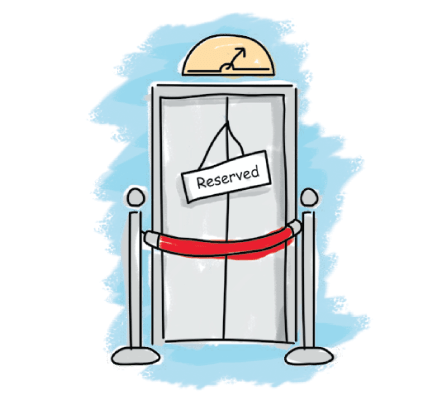
A senior Main Line moving project lives or dies on the floor plan. Get it from the community, tape the footprint of each candidate piece onto the current floor, and choose from that rather than from memory. Communities also impose their own move-in rules: reserved elevator windows, loading dock hours, a certificate of insurance from your mover. Those rules bind a Main Line moving crew as tightly as the doorway width does.
We cover the measuring process in this walkthrough on furniture and senior apartments, and our senior moving service handles the coordination end of it.
What will not go on the truck no matter what?
Fit stops mattering for a whole category of household items. Gasoline, propane cylinders, paint and solvents, aerosols, pool chemicals, pesticides, ammunition, and anything refrigerated or frozen are non-allowables. No licensed Main Line moving company will load them, and neither will a cleanout crew take the chemical ones, which surprises people.
Give the garage, the utility closet, and the shed an hour a few weeks out. Use up what you can, hand off what a neighbor wants, and route the rest to a county household hazardous waste collection. The complete category list is in our Pennsylvania non-allowables guide. For the furniture, appliances, and general clutter a move leaves behind, our cleanout and donation service clears it and routes usable goods to local partners.
What belongs on your Main Line moving checklist two weeks out?
- Measure the six or eight largest pieces and the narrowest opening at both addresses. Keep the numbers in one note on your phone.
- Confirm building rules at the destination — elevator reservation, dock hours, insurance certificate — and tell your mover what they require.
- Arrange curb space at both ends, whether that is a borough permit, cones, or a word with a neighbor.
- Clear the non-allowables and set aside a marked do-not-pack corner for documents, medications, and valuables.
- Decide which oversized pieces are staying behind, and book a donation pickup or cleanout before the truck arrives, not after.
- Get the estimate in writing, with the access conditions you have just identified written into it.
If packing is where the time goes, our packing and storage options absorb part of that list. Short-term storage covers the gap when settlement dates do not line up. If you are still comparing companies, the estimate FAQs explain what a survey should include and what a written estimate should say.
How do you tell whether a mover is properly licensed?
For a Main Line moving job that stays inside Pennsylvania, the company needs a certificate from the Pennsylvania Public Utility Commission. That number begins with an A. You can verify it through the PA PUC movers page.
For anything crossing a state line, including every PA-to-New-Jersey move, the governing authority is federal and the mover needs an active USDOT and MC number. The FMCSA’s Protect Your Move resources explain the paperwork you are entitled to receive. LiteMovers holds PA PUC A-8916211, USDOT 2173383, and MC-888055.
Main Line moving questions we answer every week
How do I know if my furniture will fit before moving day?
Measure the height, width, and depth of each large piece, then measure the narrowest opening it has to pass through at both addresses. Compare the item’s smallest dimension against that opening and leave about two inches of margin for the crew’s hands and the moving pads. If the numbers are close, tell your mover during the survey so the crew arrives prepared.
Will movers take a door off its hinges to get a piece inside?
Yes. Removing an interior door and its hinges buys an inch or two and takes a few minutes. Crews do it routinely on a Main Line moving job. Removing sofa legs, bed rails, table tops, and shelf units is equally standard. What we avoid without your permission is anything structural: a railing, a banister, a storm door frame. That call belongs to the homeowner.
Who reserves the parking space and the building elevator?
The customer does, because boroughs and buildings issue permits and elevator reservations to residents rather than to contractors. Your mover should tell you exactly what is needed. That includes how much curb length the truck requires and what a building office usually asks for. Arrange it at least a week ahead at both the origin and the destination.
What happens if something genuinely does not fit on moving day?
The crew will try the alternatives first, which usually means further disassembly or a different entry point such as a slider or a wide window. If none of those work, the piece stays with you and you decide whether to store it, donate it, or sell it. Identifying the risky pieces during the survey is what keeps that decision off the critical path on load day.
Get your Main Line moving plan in writing.
Call LiteMovers at (610) 755-5535 or toll-free at 1-877-798-8989, or email moves@litemovers.com to request a written estimate. We survey the home, flag the tight spots, and give you the plan before you book.
LiteMovers · 307 East Church Rd, Suites 1 & 2, King of Prussia, PA 19406 · (610) 755-5535
PA PUC A-8916211 · USDOT 2173383 · MC-888055
Serving Philadelphia, the Main Line, and Montgomery, Chester, Delaware, and Bucks counties. Main Line moving crews also handle interstate moves to and from New Jersey under our federal authority.

Comments are closed.